

The Attack on Black Institutions
They Fought to Keep Us Free—Now They’re Fighting to Survive
Contributor: Jemar Tisby, PhD
We must protect Black institutions.
For centuries, Black institutions—colleges, nonprofits, churches, and more—have been a bulwark against racism and centers of agency and organizing.
They have carried whole movements toward freedom—not just for Black people, but for everyone who values justice and democracy.
Now, as authoritarianism tightens its grip, those same institutions are under assault.
The timing is not a coincidence.
Black History Under Attack
The National Museum of African American History and Culture (NMAAHC) announced that it would be closed indefinitely due to the government shutdown.

Every agency feels the shutdown, but the NMAAHC closure hits different. It silences a story already under siege.
In August he wrote on Truth Social,
“The Smithsonian is OUT OF CONTROL, where everything discussed is how horrible our Country is, how bad Slavery was, and how unaccomplished the downtrodden have been — Nothing about Success, nothing about Brightness, nothing about the Future.”
The White House addressed a letter to Secretary of the Smithsonian, Lonnie Bunch, III—a Black man—that informed him of increased scrutiny of museum exhibits.
This was part of the Executive Order 14253, Restoring Truth and Sanity to American History.
It said White House officials,
“will be leading a comprehensive internal review of selected Smithsonian museums and exhibitions. This initiative aims to ensure alignment with the President’s directive to celebrate American exceptionalism, remove divisive or partisan narratives, and restore confidence in our shared cultural institutions.”
HBCUs Under Attack
In another instance of attacks on Black institutions, Historically Black Colleges and Universities (HBCUs) have been the target of multiple campus threats over the past several months.
Southern University in Louisiana, Alabama State University, Clark Atlanta University in Georgia, Virginia State University, Hampton University in Virginia, and Bethune-Cookman University in Florida are among some of the Black higher ed institutions that received threats.
Although these threats did not lead to actual attacks, campuses had to go into lockdown or shelter-in-place procedures out of an abundance of caution.
The frequent mass shootings at educational institutions make these threats feel very real and lead to an environment of fear and uncertainty on campus.
HBCUs face another assault—not physical, but ideological—and no less dangerous.
A group of Black far-right influencers under the banner of Turning Point USA, is planning a tour of HBCU’s called “Educate to Liberate.”
It is part of a movement called BLEXIT.
Co-founded by Candace Owens and Brandon Tatum, BLEXIT stands for “Black Exit.”
It’s purpose is,
“to empower all, by abolishing the victimhood mentality that holds many back from pursuing freedom and obtaining the American Dream. This Foundation exists to dispel the notion that anyone is oppressed in America simply because of the color of their skin, and encourages black Americans to challenge the cultural narrative imposed on them.”
This ideology undermines the very strength and agency that HBCUs exist to instill in their students.
Black Individuals Representing Institutions Under Attack
Sometimes the attack hits the messenger because they embody the institution itself.
In an act widely viewed as retribution, Trump officials indicted New York Attorney General, Letitia James.
James called the allegations of mortgage fraud she’s faces “baseless” and “a grave violation of our Constitutional order.”
In 2022, James sued Trump for business fraud. A case the judge ruled in her favor and that resulted in a $335 million fine for Trump. That fine was later thrown out on appeal.
The attack on James is an attack on the justice system that has, historically both denied and been the last recourse, for Black people in this country.
It is also yet another attack by this regime on Black women, the constituency least likely to support Trump and most likely to support his Democratic opponents.
Black Churches Under Attack
Black churches always come under attack during times of intensified racism and authoritarianism.
Black churches have long stood as the ark of refuge for Black communities. More than simply worship spaces, they have re-affirmed the dignity of Black lives, been sites of community organizing, and centers for Black leadership and the arts.
In the past, Black churches have been the targets of arson. But this is not a purely historical phenomenon. It’s still happening.
In 1996, more than 160 Black churches burned. It led to the creation of the National Church Arson Task Force (NCATF) to investigate the fires.
In 2015, Mother Emanuel was the target of a hate crime which a white supremacist killed nine people at a Bible study.
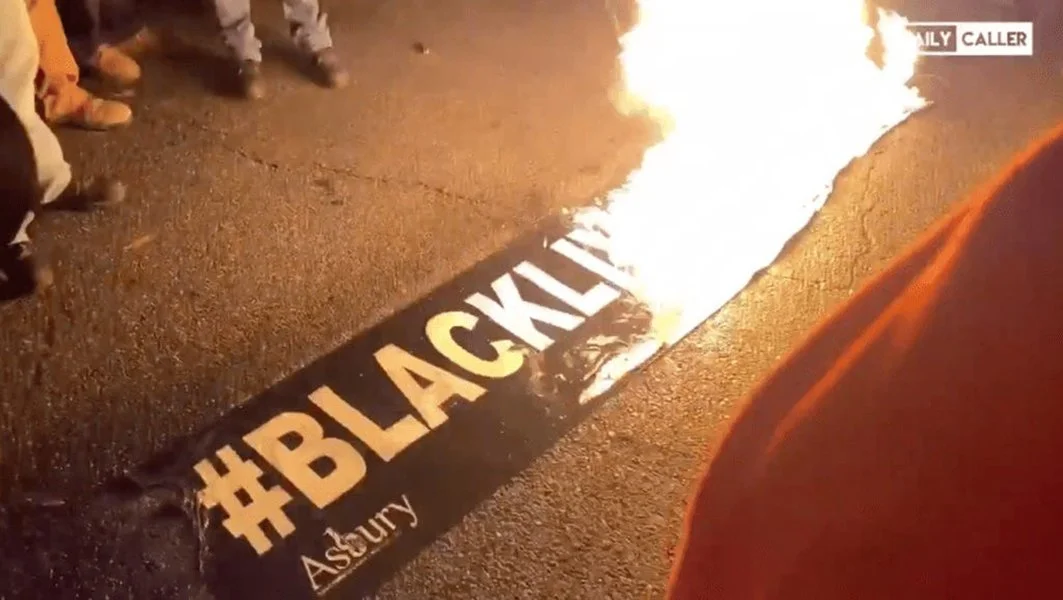
In 2020, the Proud Boys tore down a Black Lives Matter banner from historic Black church, Asbury United Methodist in Washington D.C., and burned it.
In 2024, a man admitted to setting fires outside Shiloh Gospel Temple in Rhode Island—a Black church—because of “race, color, religion, national origin and/or ethnicity of the congregants there.”
If history is any guide, as white supremacy grows bolder, the flames against Black churches will rise again.
We Must Protect Black Institutions
When democracy falters, Black institutions are the spaces that remember who we are and remind the nation what it could still be.
When truth is rewritten, these are the archives that hold the receipts.
When despair creeps in, these are the sanctuaries that keep hope alive.
Black museums, colleges, and churches are not relics of the past; they are reservoirs of resilience for the future.
Defending them is not charity work. It’s the preservation of the nation.
When Black institutions crumble, the moral foundation of America crumbles with them.
Protecting Black institutions is how we protect the soul of democracy and move toward a more perfect union.
